
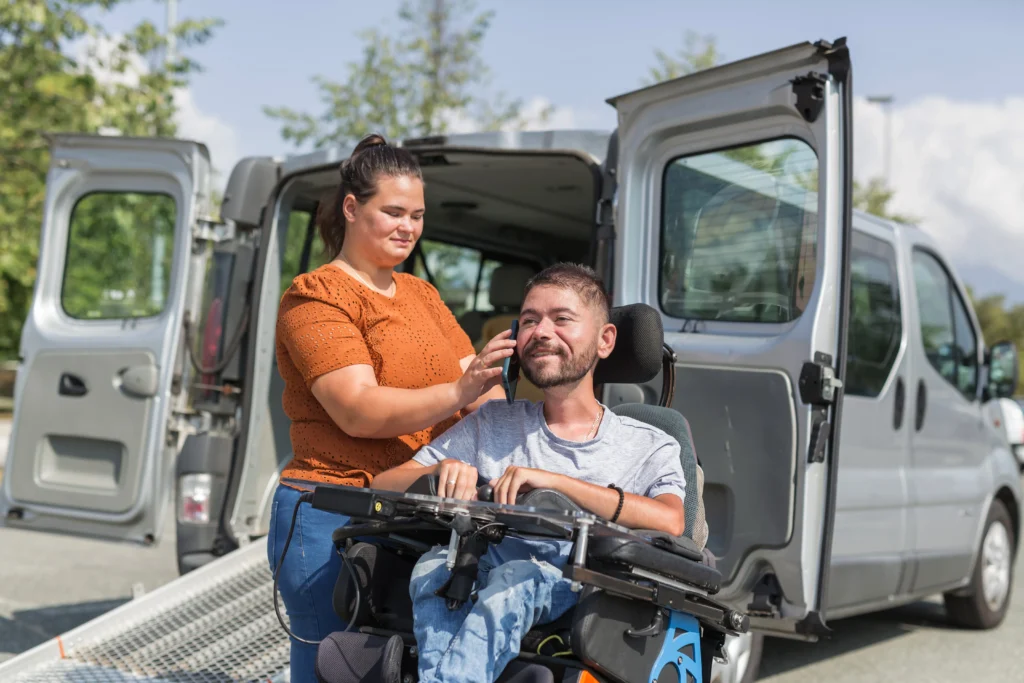
Mobility is an essential human need. For people with disabilities, congregate environments, safe and reliable transportation often are the key that opens the locks on independence, secure work, healing and connection. As a result, accessible travel is typically limited or inconsistent for many communities. This is where transport services for disability play a critical role. These services are intended to eliminate barriers to provide support and ensure that everyone is able to move freely within their community without any barriers imposed on them.
This article tackles what transport services for disability are, the importance they have, the work they do, and what makes a transport service accessible, inclusive, and truly accessible.
Understanding transport services for disability
Transport services for disability are a type of specialised transport service designed to manage the physical, sensory, cognitive, and medical needs of persons with disabilities. In contrast to the normal public transport, these services are adapted for the support of passengers who may use wheelchairs, mobility aids or who need extra help while travelling.
These services may be offered by government agencies, private companies, non-profits or healthcare providers. They can vary from hourly community shuttle services to door-to-door services.
At their most fundamental, the focus of transport services for disability is accessibility, safety and respect.
Why Transport Services for Disability Are Necessary
Accessible transport- Transportation is not a luxury. It is a necessity. Without transportation, people with disabilities can sometimes be an isolated and limited group of people.
Here are some primary reasons why the disability transport services are necessary:
- They include advocating for access to medical appointments and therapy
- They facilitate participation in education and employment
- They promote social inclusion and community engagement
- They decrease dependence on family members or caregivers
- They help improve the quality of life generally
For many people, transport services for disability are the difference between being confined to the home or living an active and fulfilling life out in the world.
Mode of Transport Services for Disability
There’s no way to fit all into one size. Different people need different amounts of support and services, which are often adapted as such.
- Door-to-Door Transport
This service collects its passengers at their homes and takes them directly to their destination. It is particularly useful for people who have limited mobility or those who cannot manage by themselves on public transport.
- Wheelchair-Accessible Vehicles
Vehicles are fitted with ramps or lifts, safe wheelchair restraints and large interiors. These vehicles are a cornerstone of effective disability transport services.
- Transport Services That Provide Assisted Transport
Some passengers need physical assistance, such as help into or out of the vehicle. Trained staff supply support and respect dignity and consent.
- Group and Community-based Transport
Shared rides for social needs, day programs or community activities help to cut costs and provide social interaction.
- Medical Transport and Therapy Transport
These services emphasise on-time, safe travel to hospitals, clinics and rehabilitation centres.
Key Aspects of High Quality Transport Services for Disability
Not all services are equal. High-quality transport services for disability have a number of important features.
Accessibility by Design
Vehicles should be specially built or appropriately modified. This includes low-floor vehicle access, ramps, lifts, handrails, and sufficient space for mobility devices.
Trained, Highly Compassionate Employees
Drivers and support staff need to be trained in disability awareness, manual handling and communication skills. Respectful interaction – interpersonal competence is just as important as technical competence.
Safety and Reliability
Punctuality, secure seats, proper restraints and well-maintained vehicles are necessary. Passengers must feel safe at all times while travelling.
Flexible Scheduling
The needs of many people with disabilities are variable—flexible booking systems to enable transport for people with disabilities to accommodate changing routines and appointments.
Clear Communication
Accessible booking systems, clear instructions and instant customer support that assist in reducing anxiety and confusion for the user.
The Role of Transport Services in Disability and Access to Healthcare
Healthcare access is strongly reliant upon transportation. Missed appointments often occur because of a lack of convenient travel options. Transport for the disabled helps fill this gap by providing access to medical facilities and reliable, comfortable travel.
These services are especially important for individuals who need to have frequent treatments, such as dialysis or physiotherapy or mental health support. Daily transportation enhances health outcomes and reduces stress for the patient and caregiver.
Supporting Employment and Education Technology
Employment and education are the keys to independence and personal growth. However, a means of accessible transport does not exist, which means that for many people, these opportunities remain out of reach.
Transport services for disability help the disabled to commute to workplaces, universities and training centres with confidence. This benefits not only the individual but also a more diverse and inclusive workforce.
Employers as well as institutions working in contact with transport providers often notice an increase in attendance and engagement among the participants with disabilities.
Social Inclusion and Participation in the Community
Being isolated is a typical struggle for disabled people. Transport service for the disabled plays a vital role in breaking this cycle.
By making it possible to participate in social events, recreation and community programs, all of these types of services promote connection and belonging. Group transport options are also conducive to peer-type interaction and shared experiences.
Social participation has a direct effect on mental health, confidence and overall wellbeing.
Problems with Providing Transport Services for Disability
Despite their importance, transport services for disability are faced with a number of challenges.
Funding Limitations
Accessible vehicles and the trained staff are a huge investment. Limited funding can limit service availability or service coverage areas.
Geographic Barriers
Rural and remote areas generally have fewer transport options, so access is uneven.
Lack of awareness, bias, misconceptions and information gaps
Many individuals with disabilities do not realise that there are transport services available and/or that the systems are difficult to navigate.
Growing Demand
With the increasing age of the population and the growing awareness, the demand for accessible transport has been escalating, leading to pressure on the existing services.
Addressing these challenges requires community and integrated planning, policy support and community involvement.
Technology and Innovation in Transport Services for Disability
Technology is changing the way transport services for disability are delivered.
Online booking platforms, GPS tracking and mobile apps for better convenience and transparency. Real-time updates give passengers confidence in planning their journeys.
Some services are also considering electric and low-emission vehicles, making accessibility go hand in hand with environmental sustainability.
Innovation, when coupled with user feedback, can have a great impact on improving the quality of services.
Choosing Suitable Transport Services for Disability
In choosing a service, individuals and families should take into consideration a number of things:
- Accessibility and comfort of a vehicle
- Staff training and attitude
- Reliability and punctuality of services
- Cost and funding options
- Area of operation and range of availability
A good provider will put the passenger’s requirements first and treat them as partners, not merely the client.
Transport Services for Disability The Future
The future of transport services to support disability is in inclusive planning and user-centred design. As awareness is increasing, so is the awareness that accessibility is not just for people with disabilities.
Collaboration between governments, private providers and disability advocates will be key. By starting to listen to lived experiences and investing in infrastructure for people, communities have an opportunity to build transport systems focused on service to all people.
Transport services for people with disabilities do not mean going from one place to another. They are about freedom, dignity and equal opportunity.
Summary
Easy transportation is the underpinnings of an inclusive society. Transport services for disability provide people with the ability and freedom to live independently, to access essential services and to participate fully in community life.
When designed thoughtfully, respectfully and flexibly, these types of services tend to be more than a convenience. They become a lifeline. The investment in the provision of strong transport services for disability is an investment in equality, wellbeing and social progress for all.