
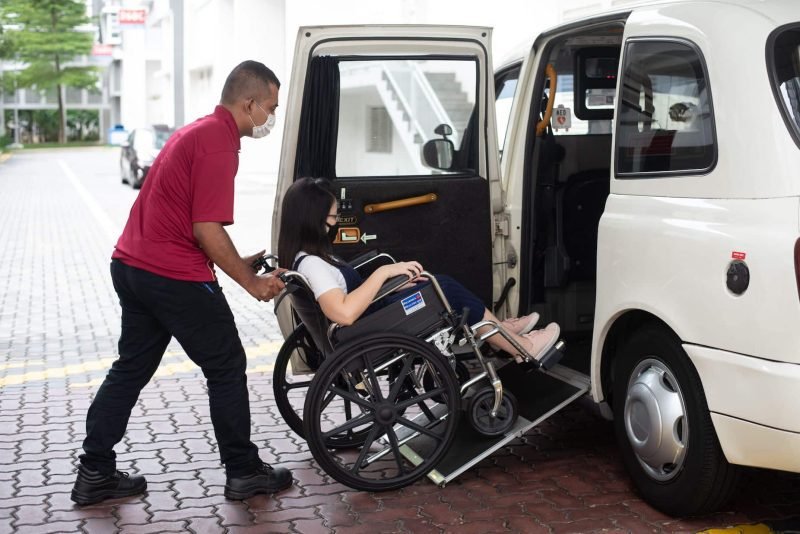
Navigating through is not merely the act of getting from A to B. It is about independence, self-respect and the capacity to participate in normal life. Transport is among the greatest hindrances to the independence of many individuals with disabilities. Disability transport services can be used to eliminate that barrier, paving the way to education, employment, health and social relationships.
These services are essential across cities and regional areas. They are not only automobiles with ramps. They are total systems that are formed based on the safety, reliability, trained personnel and awareness of the needs of every individual. When done properly, they are enablers of inclusion and actually enhance the quality of life.
This paper will examine the functionality of disability transport services, the reasons they are so significant, and what one should take into account when deciding on the most appropriate one for you or a loved one.
Disability Transport Services: What Are They?
Disability transport services are specialised transport services that are offered to individuals who struggle to use the normal public transport due to physical, sensory, cognitive or psychosocial disabilities.
Government organisations, non-profit organisations, or even individuals can run these services. They’re commonly used for:
- Health and therapeutic visits.
- Commuting to work or an educational place.
- Access to communities and social outings.
- Things such as shopping or running errands are done on a daily basis.
These services are person-centred, unlike other services that are only centred on the route. The time of pick-up, the amount of help, and the features of the vehicles are also specific to the needs.
Disability transport services are essential because they help people with disabilities to enjoy their independence
Moving around is usually the gap between assistance and actual involvement in life. Without this, even the most appropriate care or support plans may fail. Disability transport services fill this gap by providing predictability, security, and tranquillity.
The reasons why they are important include:
- They promote independence. The freedom to move freely without family and friends all the time creates confidence and independence.
- They support better health. Good transport will ensure that individuals are not stressed or at risk of missing medical appointments, therapies, and follow-ups.
- They promote social integration. Isolation is minimised, which improves mental health and wellbeing due to access to work, education, and community events.
- They enhance safety. Trained drivers and support staff are aware of mobility aids, communication needs, and emergency response.
Types of Disability Transport Services
There is no one-size-fits-all model. There are various modes of disability transportation, which suit various needs, time schedules, and lifestyles.
Door-to-Door Transport
One of the most typical ones is door-to-door transport. The driver visits the door of the individual and helps him/her into the car, and then the driver helps the individual once he/she is at his or her destination.
This is the best alternative option that can be taken by individuals who use wheelchairs or who require someone to assist them to move around safely.
Community Shuttle Services
The community shuttle services tend to operate on established routes and schedules and frequently carry a number of individuals heading in a similar direction, whether they be day programs, community centres or even social events.
They are more organised than individual transportation, but even now, these services are accessibility-focused and support-oriented.
On-Demand and Privatised Transport
Others provide on-demand disability transport, which can be booked when necessary. People tend to use such services when they need to have an appointment, a few outings or when the usual ones are not available.
This mode of transport provides greater control over the time of travelling and the route to be taken.
Long-Distance and Regional Transport
In the case of individuals in the non-urban areas, the distance between them and specialist health services or treatment can be considerably increased. There are other providers of disability transport that are endowed with the capability of making long trips safely and comfortably, such as rest stops and the right features of the vehicles.
Major Characteristics of Quality Transport Services
All the providers do not provide care of the same standard. The low-quality transport of disability is also likely to have several features in common:
- Ramps, lifts and wheelchair restraints. Accessible vehicles with ramps, lifts and secure wheelchair restraints.
- Drivers who receive training about disability support, communication techniques, and safety measures.
- Consistency, pick-up times are regular, and the schedule was clear and accurate.
- Planning that takes into consideration the individual preferences, routines and comfort of each person.
- Effective and courteous communication with passengers, families and support coordinators.
A combination of these factors facilitates the development of trust. When individuals feel secure, heard and understood, travelling is less stressful and more of a routine, bearable aspect of daily living.
The Support Staff and Drivers
The right vehicles and equipment are important, but the people who deliver the service are the ones who have the greatest impact. In efficient disability transport services, drivers do not simply happen to be drivers; they are support professionals.
They usually have the tasks of:
- Assistance in the loading and unloading of passengers.
- Securing wheelchairs and other mobility aids properly.
- Speaking in a calm, direct and respectful manner.
- Verifying comfort and safety during travel.
- Being able to act accordingly in the case of changes in plans or unforeseen circumstances.
Ongoing training is necessary. Education on various disabilities, cultural sensitivity, and de-escalation and problem-solving will all help to have a safer and more fruitful experience.
The way Disability Transport Services Facilitate Independence.
Being independent does not necessarily imply that you do it all by yourself. Frequently, it is necessary to have the right support in place in order to make your own choices.
Disability transport services allow people to have greater control in their day by offering dependable and convenient transport. They also help simplify the process of choosing when to attend a class, hang out with friends, go to an appointment, or participate in other community events, without necessarily having to plan around their limited and unreliable transportation choices.
In the long term, such freedom will result in confidence, life skills, and a more robust sense of identity. To a great number of individuals, their transport is the backbone upon which they manage to achieve other objectives, such as work, education, or socialisation.
Funding and Access Considerations
Accessing disability transport services can sometimes depend on how it is funded and the eligibility. Transport may be funded in numerous locations by the disability support schemes, local councils, or health services.
Some of the common things to put into consideration are:
- Eligibility according to the type of disability, level of support needs or functional impairment.
- Purposes to which travel is permitted: work, education, and medical appointments.
- Budget restrictions, limits, or restrictions on the frequency of usage of services.
- The registration, compliance, and standards of providers.
This knowledge enables people, families, and support coordinators to plan in advance, prevent service lapses and maximise the use of available funds.
Selecting the Appropriate Disability Transport Provider.
The choice of transport provider is a big issue because it may affect everyday life significantly.
In the comparison of disability transport services, the following questions can be asked:
- Do the vehicles meet the present requirements, and can they be modified when the present requirements change in future?
- What are their driver and support staff training?
- To what extent is the booking and scheduling system flexible?
- What does the service do in the case of delays, cancellations or emergencies?
- Does it have a definite feedback or complaint procedure?
One should also attempt to consult the individual who will be utilising the service in the decision. The final decision should be made based on their comfort, preferences and their feeling of safety.
Disability Transport Services Face Challenges
Despite the fact that the services of disability transport are critical, they are experiencing continuous challenges.
In most locations, particularly regional and remote communities, the demand exceeds supply. The problem of workforce shortage can complicate the process of offering regular, quality services. The models of funding do not necessarily meet the real cost of providing high-quality, person-centred transport.
Another problem is coordination. Transport has to correspond with the time of the support workers, the time of the appointment, school/work schedules, and family patterns. A lack of systems that communicate with one another and last-minute plan changes can add stress to both parties.
To overcome them, cooperation between providers, governments, auxiliary services, and communities is needed.
Accessible Transport: Innovation and the Future
Disability transport is being provided differently. More options and enhanced experiences are being made using new technology and improved design.
The following are some of the essential developments:
- Online booking and tracking systems to ensure that people are able to know the location of their vehicle and when it will be delivered.
- Better design of vehicles, which concentrate on comfort, dignity, and ease of use.
- Increased health, disability and transport system coordination and planning.
- Greater emphasis on user feedback and co-design, in which individuals with disabilities contribute to the development of the way services are handled.
The objective of these changes will be to make services more responsive, inclusive and user-friendly to preserve safety and reliability at the heart.
Disability Community Inclusion and Transport Services.
True inclusion is to do away with practical barriers and not merely have intentions. One of the largest of those useful blocks is transport.
When the disability transport services are functioning properly, it is an advantage to all. The work environments can be open to a greater number of diverse employees. Social places and occasions are more representative. Individuals with disabilities are more visible and participatory in the normal life.
Transport may be just a logistical matter, but its sensitive human effect is tremendous. It influences the ability of the persons to attend, where they attend, and how frequently they attend.
Summary
Safe and reliable transport is not a privilege. To individuals living with disabilities, it is a fundamental necessity of self-sufficiency, well-being, and relatedness.
Considerably planned disability transport services go way beyond the move from place to place. They endorse opportunity, dignity and choice. These services will keep being at the core of establishing more inclusive and welcoming societies as awareness increases and systems keep on being improved.
In the end, any investment in convenient transport is an investment in people and in a more interlinked and just society for all.